Frankie Roth · 17 September 2026
Driftwood Carvings as Encoders of River Data in Youth Workshops on Songbird Corridors
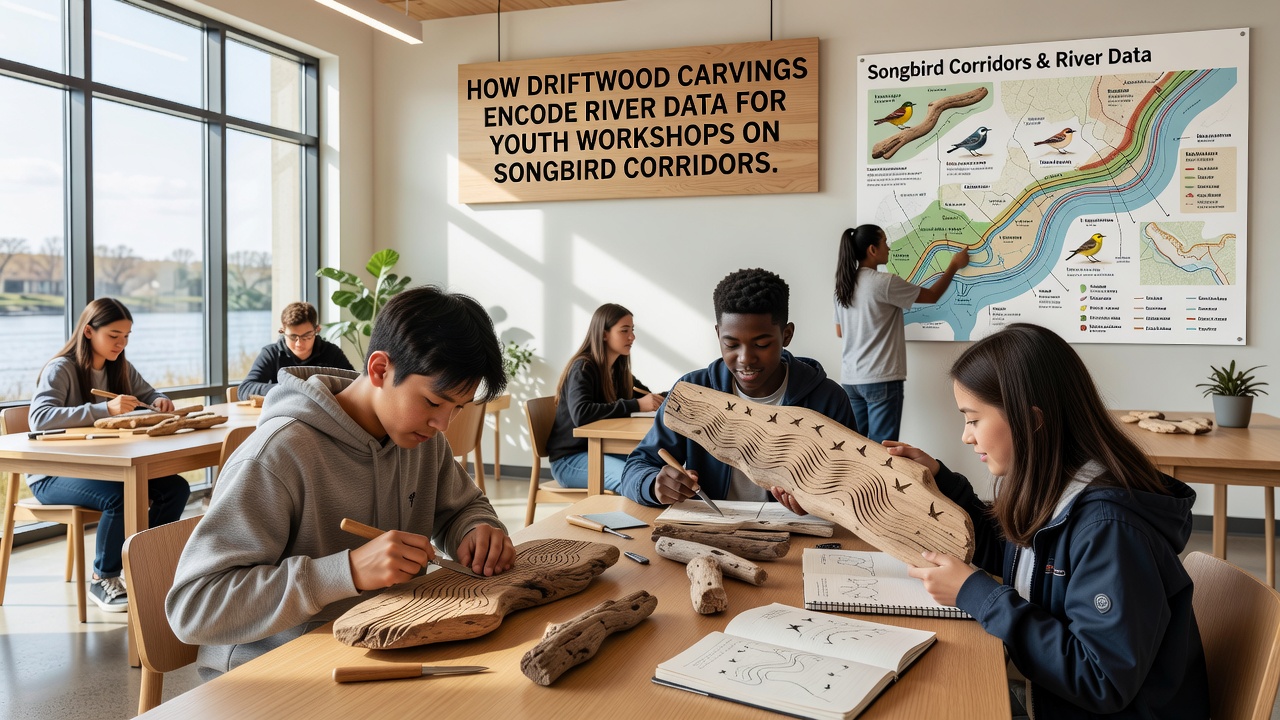
Driftwood collected from riverbanks undergoes careful carving to record measurements of water levels, sediment loads, and seasonal flow variations, and these artifacts then serve as teaching tools in youth workshops that focus on songbird migration routes. Researchers at institutions studying avian pathways have documented how such carvings translate raw hydrological data into visual patterns that participants can interpret during field sessions. According to data from the US Geological Survey, river systems in North America show measurable changes in discharge rates that align with shifts in bird corridor usage, and the carvings capture these correlations through standardized symbols for depth, velocity, and debris accumulation.
Methods of Data Encoding in Driftwood
Carvers select pieces based on wood density and grain orientation, then incise marks that correspond to specific metrics gathered from gauging stations along major waterways. A series of notches might indicate monthly average flow in cubic meters per second, while etched lines track turbidity readings collected over the same period. Studies conducted by Environment and Climate Change Canada demonstrate that these physical records maintain accuracy when cross-referenced with digital sensor outputs, and workshop facilitators use the carvings to demonstrate how river conditions influence insect hatches that sustain songbird populations during stopovers.
Participants learn to read the carvings by matching symbols to field measurements taken on site, and this process connects directly to observations of species such as warblers and thrushes that follow river valleys as navigation aids. Data collected in 2025 from multiple watersheds reveals that carving accuracy improves when carvers incorporate local species-specific indicators, such as bark texture changes linked to upstream erosion events. Youth groups then apply these skills to map potential corridor adjustments based on projected changes in water quality and vegetation density.
Integration with Songbird Corridor Education
Workshops combine carving sessions with guided walks where attendees record bird sightings and compare them against historical patterns encoded in the driftwood. Facilitators present case examples from Pacific Northwest rivers where sediment data carved into logs predicted shifts in riparian zones that affected breeding success for several neotropical migrants. Observers note that this hands-on approach allows participants to see direct links between hydrological variables and habitat suitability without relying solely on digital interfaces.
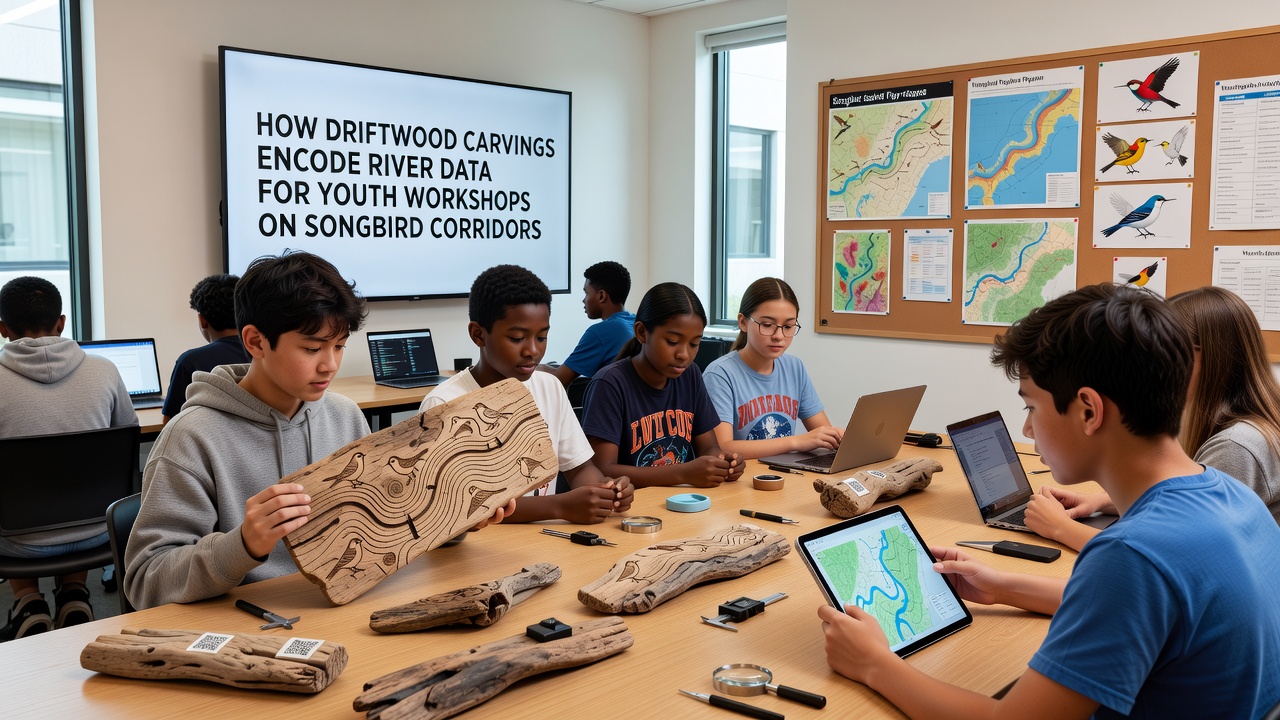
Programs scheduled to expand in September 2026 will incorporate additional river basins, and organizers plan to include carvings that reflect data from both urban and rural stretches to highlight variations in corridor connectivity. Research indicates that exposure to physical data representations strengthens retention of ecological concepts compared with text-only materials, and multiple pilot sessions have shown measurable gains in participants' ability to predict habitat changes from river metrics alone.
Workshop Structure and Participant Outcomes
Each session begins with a review of recent gauge readings followed by carving demonstrations that translate numbers into durable marks on wood. Groups then split into teams to interpret existing pieces and propose new symbols for emerging data trends, such as increased flood frequency or altered ice-out dates. Those who've completed the program often report improved skills in data visualization, and follow-up surveys track how many participants continue monitoring local rivers independently after the workshops end.
Coordinators source driftwood from designated collection zones to avoid disturbing active nesting areas, and they ensure all carvings remain non-invasive so they can be deployed along trails without affecting natural processes. Figures from ongoing monitoring efforts show that corridors with integrated educational markers experience higher rates of community reporting on bird arrivals and departures, which in turn supports broader conservation databases.
Conclusion
Driftwood carvings function as portable archives that link river hydrology to songbird corridor dynamics, and their use in youth workshops provides a tangible method for transmitting field data across generations. As programs prepare for expanded offerings in September 2026, the approach continues to draw on established measurement protocols from agencies across regions to maintain consistency and educational value.