Blake Schröder · 1 October 2026
Carved Verses Along Migration Paths: How Driftwood Sculptures Encode Decades of Avian Data for Riverbank Restoration Teams
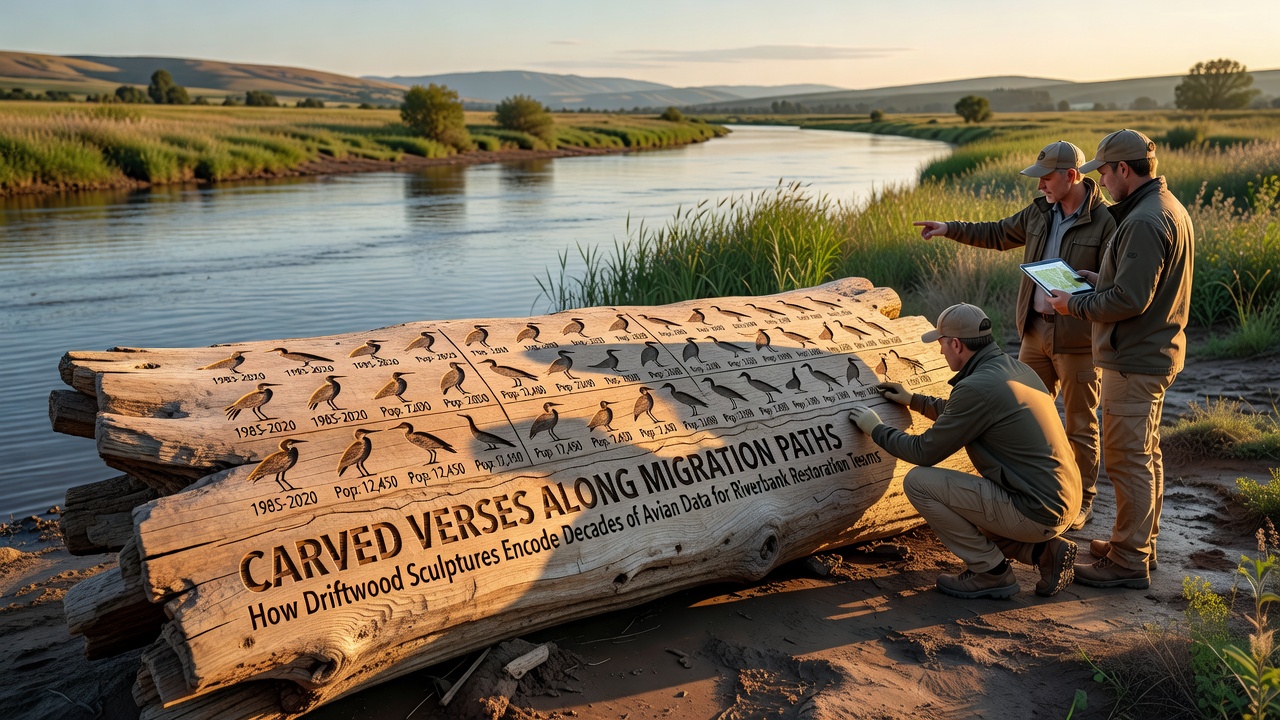
Driftwood sculptures along major waterways now serve as repositories for avian migration records collected over multiple decades, and restoration teams rely on these carved forms to guide habitat work at specific sites. The sculptures incorporate symbols and grooves that correspond to bird species counts, seasonal timing, and route shifts documented since the mid-20th century. Workers retrieve the encoded information by matching surface patterns to reference keys developed by field biologists, which allows direct application during bank stabilization and vegetation replanting projects.
Data Encoding Methods in Practice
Carvers translate raw field observations into geometric incisions and layered reliefs on pieces of river-deposited wood. A series of parallel lines might represent annual passage numbers for a given species, while intersecting arcs indicate documented changes in stopover locations. Teams working on the Sacramento River in California have used such pieces since 2018 to prioritize erosion control measures at bends where historical data show repeated use by shorebirds. Similar installations appear along the Murray River in Australia, where local crews cross-reference carvings with satellite telemetry summaries released by the Commonwealth Scientific and Industrial Research Organisation.
Restoration crews in the Pacific Northwest began incorporating the sculptures into project planning after 2022 when regional monitoring programs expanded coverage of neotropical migrants. The physical durability of driftwood permits placement in flood-prone zones where paper records or digital devices would require frequent replacement. Observers note that the carvings remain legible after repeated high-water events because the wood grain itself guides the depth and direction of each cut.
Integration with Riverbank Projects
Restoration teams schedule sculpture installation ahead of active planting seasons so that encoded route data informs the selection of native species mixes. In October 2026, crews along the Columbia River corridor plan to deploy updated sets that incorporate telemetry from the preceding three migration cycles. These new pieces will sit at access points where equipment staging occurs, giving crews immediate visual access to long-term trends without additional site visits to remote sensor arrays.
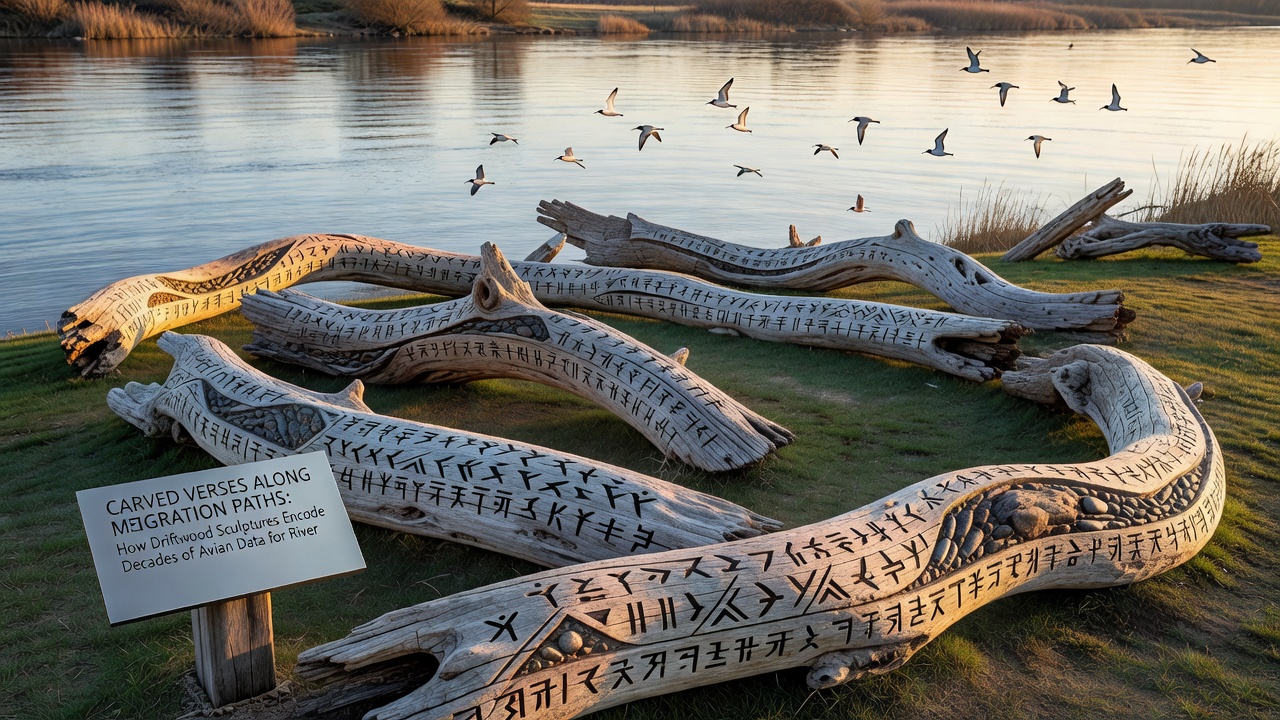
One project in British Columbia paired the sculptures with LiDAR surveys of bank topography. The combination allowed planners to align revegetation zones with historical foraging areas identified in the carvings. Data from Environment and Climate Change Canada provided the baseline counts that carvers then rendered into the wood surfaces. Teams reported fewer adjustments during the planting phase because the visual record reduced the need to consult separate spreadsheets while on site.
Training and Reference Systems
Workshops for new restoration personnel now include sessions on reading the carved notation systems. Instructors present matched sets of sculpture photographs and the original observation logs so participants learn to interpret symbols consistently across different river systems. The approach reduces transcription errors that can occur when transferring numbers between formats. Several districts in the Upper Mississippi basin adopted the method after initial trials showed consistent use of the reference keys by crews with varying levels of prior field experience.
Updates to the carving system occur when new multi-year datasets become available. Biologists submit summarized figures to carvers who then prepare replacement panels or add extensions to existing pieces. This process maintains continuity while incorporating recent shifts in arrival dates or species composition. The physical format also serves as a durable archive when electronic storage systems face maintenance or access limitations during remote fieldwork.
Conclusion
Driftwood sculptures continue to function as portable data carriers that connect long-term avian observations with on-the-ground decisions made by riverbank restoration teams. The method relies on established field records from multiple agencies and translates those records into durable physical forms suited to active work sites. As additional regions adopt the practice, the shared reference systems support consistent application of migration data across separate watersheds.